Collaboration Took Center Stage at the Final Seminar
A total of 120 professionals, policymakers and representatives of civil society gathered at the Let´s Talk about Children (LTC) project’s final seminar to discuss the state of child and family mental health in Europe, as well as the significance and future of the LTC method. Throughout the day, impactful speeches highlighted both the shared concern for young people’s mental health and the necessity of international cooperation to improve it.
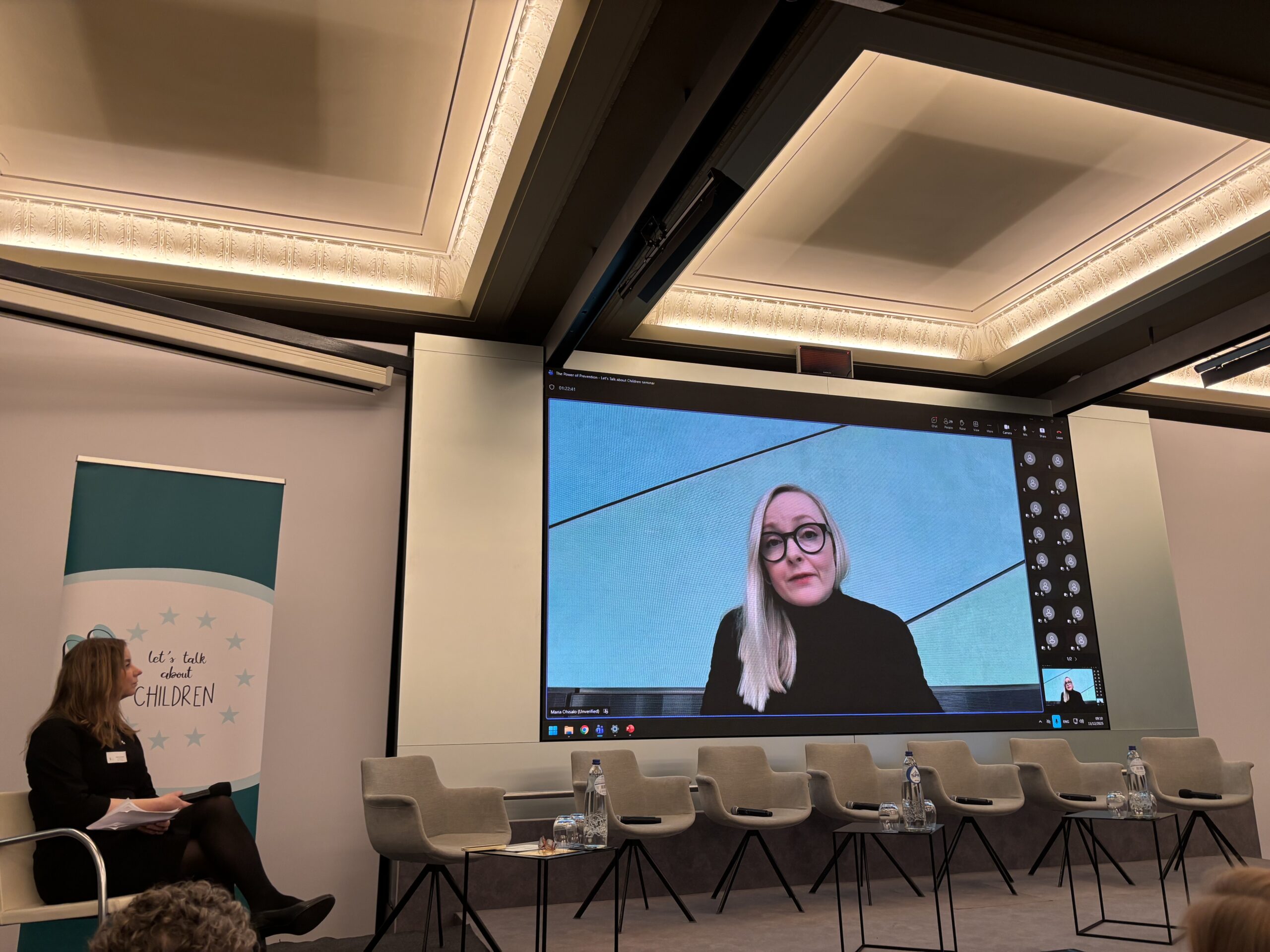
Member of the European Parliament Maria Ohisalo opened the seminar with fresh WHO statistics: one in seven children or young people in Europe lives with a mental health disorder, and among girls aged 15–19, as many as one in four. Mental health problems have increased by one third over the past 15 years, and tragically, suicide remains the leading cause of death among 15–29-year-olds. Ohisalo emphasized that every child has the right to grow up in a healthy, supportive and safe environment, and she thanked all those involved in the project for their important work.
The developer of the method, Professor Emerita Tytti Solantaus, provided background on the history of method and the different phases of the project. She noted that research shows up to 70% of parents with mental health problems reported having gained parenting ideas from LTC—something she initially found remarkable:
“It must be that LTC had opened the door to their own skills, which had been blocked by the psychiatric symptoms and the stigma, which labels them poor parents”, tells Solantaus.
LTC is the first method that asks what it is like to be a parent
Following Solantaus’s historical overview, LTC project leader Professor Kirsi Peltonen briefly presented the goals achieved during the project and plans for the future. The aim has been to train 1,400 practitioners and 80 trainers of LTC and to offer the method to 2,900 families. These targets will be reached by the end of the project, and in addition, each project country will have at least one master trainer. Implementation work, however, continues in the project countries, which are currently preparing sustainability plans to ensure the method’s permanent integration.
Perhaps the most impressive speech of the day was held by Finnish lived-experience expert Pia Köpsi, who shared her family’s journey with LTC. The discussions helped her see the world through her child’s eyes, reduced feelings of shame and fear, and ultimately opened the door to receiving help. The audience was particularly interested in the children’s experiences of the conversations and in what factors contributed to the parent’s sense of safety. Köpsi explained that she had previously participated in discussions where the interlocutor was empathetic and kind, but the approach to problems was misguided. Ultimately, the LTC approach— focusing on the child’s perspective — was the decisive factor in the family’s access to support.
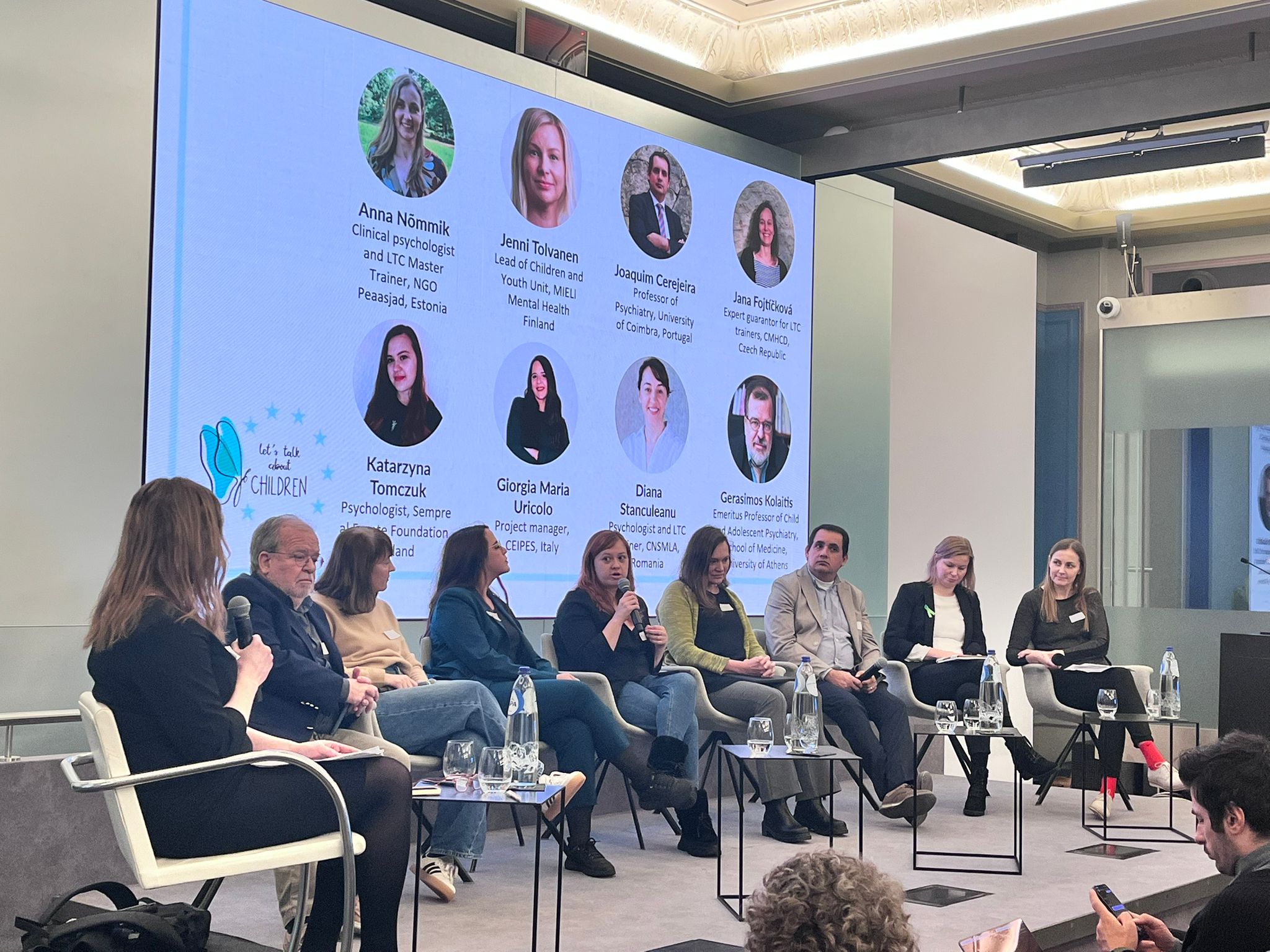
From one family’s experience, the seminar moved to a broader perspective as partner countries joined a panel discussion. Professor Peltonen moderated by asking about experiences of using the method in different countries. Panelists emphasized that LTC has opened conversations between parents and children without fear or shame. The method provides both parties with empowering experiences and changes the mindset of professionals and families alike. LTC does not focus solely on the child but creates a shared space where children and adults can meet and strengthen together. One panelist highlighted a particularly important observation from their work: LTC is the first method that asks what it means to be a parent.
From Practice to Policy and Back Again
In the afternoon, attention turned to policy as Mental Health Europe’s policy officer Rayan Temara presented political recommendations developed on the basis of the project. These emphasized the use of existing EU frameworks, the systemic nature of prevention, the strengthening of multidisciplinary cooperation, and ensuring that EU funding supports preventive work in practice.
Following the presentation of recommendations, the discussion continued with Mental Health Europe’s Director Kadri Soova, COFACE Families Europe’s Director Elizabeth Gosme, European Commission Child Rights Coordinator Marie-Cécilie Rouillon, and DG EAC policy officer Oana Felecan from European Comission. The panel explored how holistic mental health support can be advanced through policymaking.
Participants emphasized that the large-scale use of LTC requires funding, projects, and research. The greatest challenge identified was the lack of regional centers: in many countries, families have no places to turn to for help. Audience questions highlighted the importance of networks—international cooperation makes it possible to compile results, share research knowledge, and develop a common vocabulary across borders. Shared learning and the exchange of best practices were seen as central to developing the method and ensuring its permanent integration.
Professor Peltonen concluded the seminar by emphasizing that no user of the method can work alone. International cooperation and networks are essential to effectively support the mental health of children and families. She invited all participants to continue collaboration across borders.
At the partners’ dinner, the past was remembered and the future envisioned
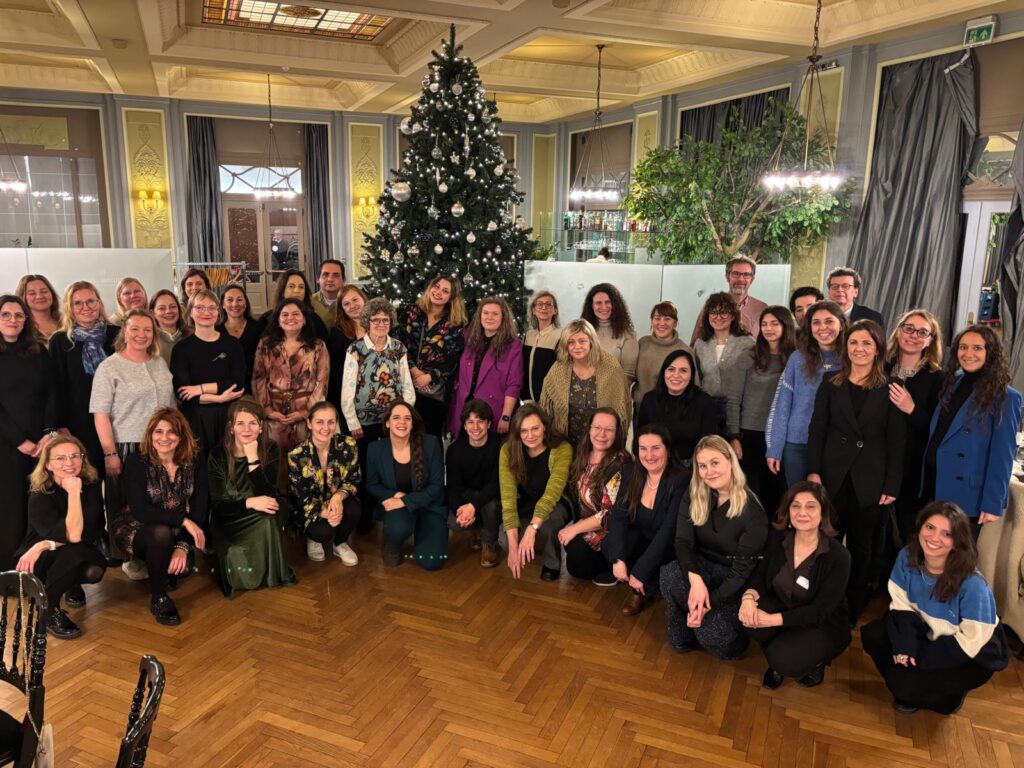
The seminar day culminated in a joint dinner of LTC project teams from different countries, where colleagues who had worked together for three years met once more face-to-face. During the dinner, each partner shared their own experiences, wishes and plans for future collaboration.
Over the course of the project, a close bond had formed between the partner organizations, and in their speeches they warmly expressed gratitude to one another for the past years. The partners hoped that the collaboration would continue in the future and that successful practices and achievements could keep being shared among them.